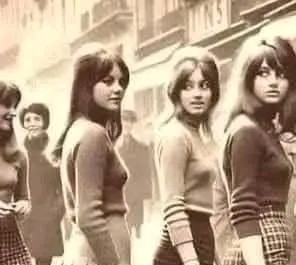
The 1960s didn’t just introduce new clothes — it introduced a completely new attitude.
For the first time, fashion wasn’t controlled only by designers and high society. Young people, music, and street culture began shaping trends. Clothes became lighter, shorter, brighter, and far more expressive than the elegant, conservative looks of the 1950s.
Women were no longer dressing only to look “proper.” They were dressing to feel free.
The Rise of the Mini Skirt
Nothing defined the 60s more than the mini skirt.
Popularized by designer Mary Quant in London, the hemline suddenly jumped several inches above the knee — shocking older generations and empowering younger ones.
The mini skirt became a symbol of independence. It matched the energy of the youth movement and the changing role of women in society. Paired with colored tights or knee-high boots, it quickly spread across Europe and America.
Mod Style and Bold Colors
The early and mid-60s introduced the “Mod” look — short for modern.
This style focused on clean shapes, sharp cuts, and eye-catching colors.
Women wore:
Geometric dresses
Color blocking outfits
Black and white contrasts
Large plastic accessories
Oversized sunglasses
Fashion suddenly looked futuristic, almost space-inspired, especially after the Space Race captured public imagination.
Shift Dresses and Simple Silhouettes
Tight waistlines disappeared. Instead of curvy tailoring, designers embraced straight shapes.
The shift dress became a wardrobe essential — comfortable, simple, and easy to wear.
This change reflected social change: women wanted mobility, not restriction.
The Hippie Movement and Natural Style
By the late 1960s, fashion softened.
The hippie influence replaced structured clothing with natural fabrics and flowing designs.
Women started wearing:
Maxi dresses
Bell-bottom pants
Fringe jackets
Floral prints
Peasant blouses
The look symbolized peace, freedom, and rebellion against rigid social expectations.
Hair and Makeup Trends
Beauty also transformed dramatically.
Early 60s:
Heavy eyeliner
Pale lips
Bouffant hairstyles
Late 60s:
Long natural hair
Minimal makeup
Earth-tone looks
Makeup shifted from polished glamour to youthful authenticity.
Why the 1960s Still Matters
Modern fashion still borrows from the 60s — from oversized sunglasses to mini skirts and relaxed silhouettes.
The decade proved clothing could express identity, not just status.
For the first time, fashion followed people… instead of people following fashion.