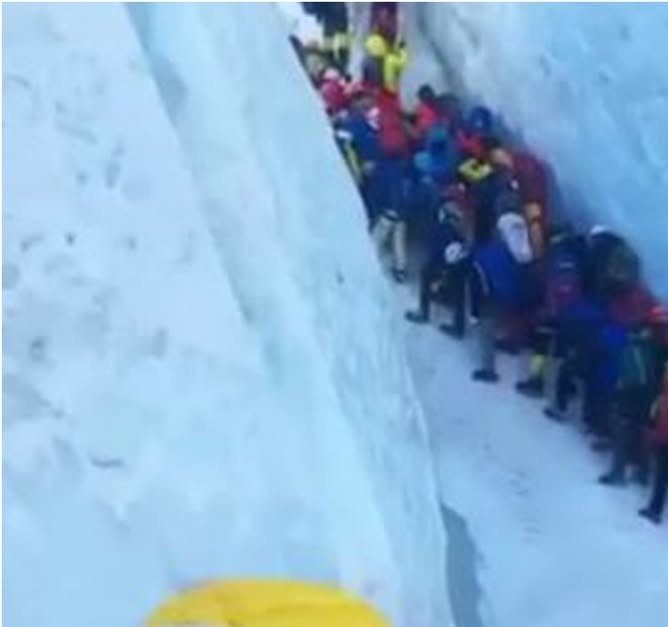
In the spring of 2019, Mount Everest, the world’s highest peak at 29,032 feet, became a deadly bottleneck, claiming 11 lives in just nine days during what many call the mountain’s most tragic climbing season, per New York Times (May 26, 2019). Overcrowding, fueled by a surge in permits and inexperienced climbers, turned the “death zone” into a traffic jam of horror, captured in haunting photos that went viral, per ABC News (May 29, 2019). With climbers waiting hours in sub-zero temperatures for their turn on the summit, the season’s toll reached 18 deaths overall, surpassing the infamous 1996 disaster immortalized in Jon Krakauer’s Into Thin Air, per The Guardian (June 6, 2020). For Facebook’s adventure and history fans, these nightmare images and stories of survival and loss offer a gripping reminder of Everest’s unforgiving nature. This analysis explores the causes of the 2019 tragedy, the impact of the viral photos, survivor accounts, and the lasting lessons for mountaineering.
The Causes of the 2019 Tragedy
The 2019 Everest climbing season was marred by a perfect storm of factors leading to 11 deaths between May 22 and May 30, primarily due to overcrowding and weather, per New York Times. Nepal issued a record 381 permits, up from 346 in 2018, driven by commercial expedition companies charging $30,000 to $100,000 per climber, per ABC News. This influx, combined with a short weather window—only a few days of clear skies in late May—created long queues on the Hillary Step and summit ridge, where climbers faced -30°F temperatures and low oxygen, per The Guardian.
Inexperienced climbers, often relying on Sherpas for fixed ropes and oxygen, exacerbated the risks. Many suffered from altitude sickness, frostbite, or exhaustion while waiting 2-3 hours in the death zone (above 26,000 feet), where the body deteriorates rapidly, per Outside Online (September 15, 2022). Notable deaths included Indian climber Anjali Kulkarni (55), who collapsed from fatigue, and American Christopher Kulish (62), who died of a heart attack post-summit, per