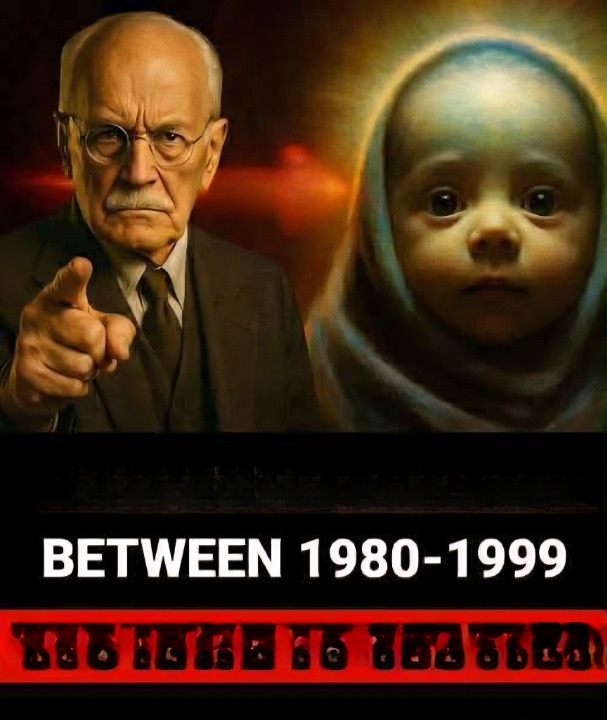
Some generations grow up during times that are relatively calm while others come into the world when familiar structures begin to loosen and the ground beneath them starts to shift. Those born between 1980 and 1999 belong to that second group. These people got to be raised in a period when certainty started to melt down before anything stable replaced it.
When you think about it, the childhood of these generations seemed ordinary and their expectations regarding school, social life, family, and routine life were clear. But then came the Internet and the rules they were used to follow changed mid-game. What once was rock solid was now up for negotiation.
People born between 1980 and 1999 have been caught between two worlds; two different eras that affected how they think, feel, and see the world.
While they are familiar with traditions and tend to stick to them as much as possible, they also value progress. To the parents of these people, it felt like their children started to rebel out of nowhere, when that’s in fact what psychologists—among them Carl Jung—have characterized as the inner world becoming active when outer structures cease to provide meaning.
Jung believed that during periods of transition, people turn inward not because something is wrong, but because something is forming. That idea helps explain why many from this generation ask difficult questions early on, feel uncomfortable with superficial routines, and resist lives that “work” on paper but feel empty inside.
Many who belong to these generations also report vivid dreams, strong emotional reactions, or sudden moments of clarity. These dreams and recurrent images were, Jung believed, the psyche’s means of communication when language fell short.
And when they’re brushed off, they don’t manifest it as something dramatic but it often shows up as generalized anxiety with no clear trigger, a feeling of not quite fitting in, or a constant state of fatigue. Jung cautioned that tension within the self, when left unresolved, does not disappear but returns as unease.
This generation is also less willing to repress parts of themselves. Jung called the rejected parts of the personality the “shadow,” and argued that maturity comes from integration, not denial.
The quest for authenticity can unnerve families who value order and predictability, but it can also lead to greater emotional honesty.
For parents, this creates a challenge. The instinct is often to correct, normalize, or push for quick solutions. But control rarely helps. Most important of all is to be there, to listen without rushing to solve, to let questions surface without treating them as threats, and to offer structure without stifling meaning.
People born between 1980 and 1999 are often described as lost but a more accurate description may be unfinished. In Jung’s terms, they are in the middle of a long process of attempting to harmonize reason and purpose, permanence and flux, the truth within and life without.
As a parent to someone who belongs in this so-called “lost” generation, your support, your ability to listen, and your patience can be the bridge that helps transform their sensitivity into strength and their search into a life of meaning.
Please SHARE this article with your family and friends on Facebook.