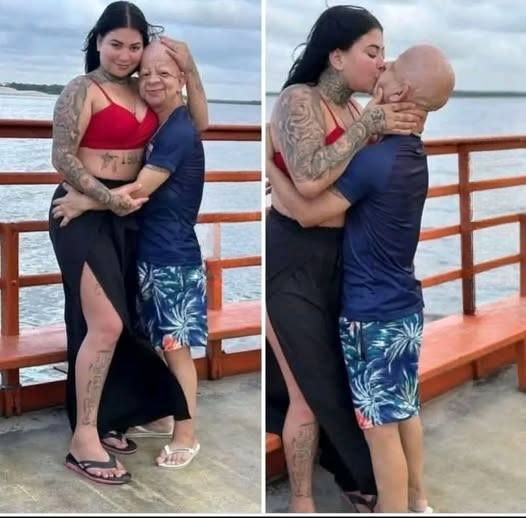
She Married a Millionaire — Then Realized It Didn’t Make Her Happy
From the outside, it looked like a story many people quietly envy.
A young woman married a man with significant wealth. Financial worries disappeared almost overnight. There were no concerns about rent, bills, or long-term stability. Friends congratulated her. Strangers assumed she had “won” at life.
But not long after the wedding, she began to notice something unsettling.
She didn’t feel happier.
In fact, she felt strangely indifferent.
What surprised her most was not dissatisfaction with her lifestyle, but the absence of emotional fulfillment she had expected to arrive with it. The comfort was real. The security was real. Yet the emotional connection she imagined wealth would somehow complete never materialized.
Why Money Often Feels Like the Answer — Until It Isn’t
Relationship psychologists explain that financial security is frequently mistaken for emotional safety. For people who have experienced instability, stress, or scarcity, wealth can feel like a solution to far more than practical problems.
Money promises relief. It promises freedom from anxiety. It promises options.
But what it does not promise is emotional intimacy.
Marriage counselors note that when a relationship is built primarily on financial stability, emotional connection is often assumed rather than cultivated. Early excitement, admiration, or gratitude can mask deeper incompatibilities that only surface once daily life settles in.
When Comfort Replaces Connection
In this case, the young woman did not feel mistreated. Her husband was not unkind. The marriage was calm, predictable, and materially comfortable.
That calm, however, slowly turned into emotional distance.
Therapists describe this as a common pattern in relationships where practical benefits overshadow emotional compatibility. Without shared values, emotional curiosity, or mutual vulnerability, couples may coexist peacefully but feel internally disconnected.
Over time, indifference replaces excitement. Silence replaces meaningful conversation. The relationship functions — but it does not nourish.
The Emotional Reality of Wealth-Based Relationships
Mental health research shows that sudden or significant wealth can actually amplify existing emotional gaps rather than fill them.
Wealth often introduces new dynamics: power imbalances, unspoken expectations, and differing views on control and independence. When one partner holds most of the financial power, the other may struggle with autonomy, identity, or emotional equality — even if the arrangement is never openly discussed.
Marriage therapists emphasize that these dynamics do not automatically lead to conflict. Instead, they often lead to quiet dissatisfaction — a sense of living a life that looks complete but feels emotionally unfinished.
“I Thought I Would Care More”
One of the most common statements therapists hear in similar situations is not anger or regret, but confusion.
“I thought I would care more.”
This emotional numbness is not a sign of ingratitude. Mental health professionals explain that it often reflects unmet psychological needs. Humans require more than safety and comfort to feel fulfilled. They need emotional reciprocity, purpose, and a sense of being deeply known.
Without those elements, even an ideal lifestyle can feel empty.
Why Love and Wealth Operate on Different Systems
Money solves external problems. Love addresses internal ones.
Relationship psychology makes a clear distinction between material satisfaction and emotional satisfaction. While financial security reduces stress, it does not create emotional intimacy, shared meaning, or personal growth.
Couples who thrive long-term tend to build their relationships around communication, mutual respect, emotional safety, and aligned values. Wealth may support these foundations, but it cannot replace them.
When money becomes the primary bond, the relationship often lacks resilience when emotional challenges arise.
The Role of Counseling in High-Wealth Relationships
Marriage counselors increasingly work with couples where financial security is abundant but emotional connection is lacking.
Therapy in these cases does not focus on money management alone, but on identity, autonomy, and emotional expression. Counselors help partners explore questions that wealth often delays rather than resolves:
-
Who am I in this relationship?
-
What do I need emotionally?
-
Do we share a vision beyond comfort?
-
Can we communicate honestly without fear of imbalance?
Professional guidance can help couples reconnect — or, in some cases, recognize that emotional alignment was never truly present.
A Quiet but Important Lesson
This story is not about blaming wealth or romanticizing struggle.
It is about understanding that major life decisions made for practical reasons still require emotional awareness. Mental health specialists stress that ignoring emotional needs does not make them disappear — it only postpones their consequences.
Marrying for stability may solve immediate concerns, but without emotional intimacy, it often leaves deeper needs unmet.
What This Story Teaches
The real lesson here is not about wealth, but about clarity.
-
Financial security is valuable, but it is not the same as emotional fulfillment.
-
Relationships require ongoing emotional investment, not just lifestyle compatibility.
-
Counseling and self-reflection can help individuals recognize their true motivations before making permanent commitments.
-
A “perfect life” on paper can still feel empty without emotional connection.
Final Reflection
The young woman did not fail. She learned something important — something many people only realize much later.
Happiness does not arrive automatically with comfort. Emotional fulfillment cannot be outsourced to money, status, or lifestyle.
In relationships, what truly sustains long-term satisfaction is not what a partner provides materially, but how they connect emotionally.
Sometimes, realizing you “don’t care” is not a flaw — it is a signal asking you to listen more closely to what you actually need.