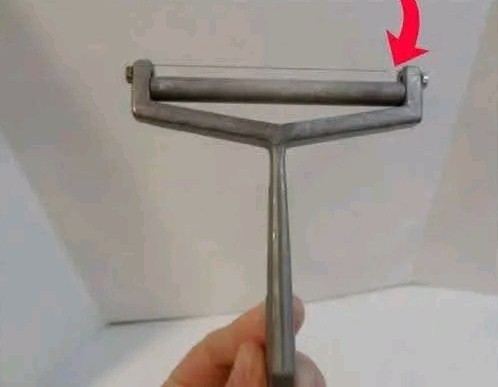
At first glance, this odd-looking metal tool doesn’t look like it belongs in a kitchen at all. Some people guessed it was a medical instrument, others thought it was part of a sewing kit, and a few even believed it was an early torture device. Social media users were completely baffled when photos of this vintage item started circulating online — until historians and antique kitchenware experts stepped in.
The mysterious tool is actually a vintage butter curler, a once-popular utensil used to shape butter into elegant decorative curls. Long before spray cans, fancy packaging, or pre-shaped butter pats, presentation mattered just as much as taste, especially in upper-class homes and formal dining settings.
In the late 1800s and early 1900s, butter curlers were commonly used by homemakers and professional cooks to turn simple butter into beautiful table décor. The tool typically featured a handle and a curved or slotted metal blade. When dragged across chilled butter, it produced delicate curls that could be placed on bread plates, serving trays, or even arranged into floral designs.
Butter curls weren’t just about aesthetics. In an era without modern refrigeration, butter was often stored cold and firm. Curling the butter helped soften it slightly, making it easier to spread while also giving it an appealing texture. Guests were often impressed by these small touches, which were considered a sign of refinement and hospitality.
What makes this tool so confusing today is how rarely it’s used in modern kitchens. With butter now sold pre-portioned, whipped, or softened, the need for a dedicated butter curler has faded. Many people today have never seen one in action, which explains why the tool sparks so much curiosity and wild speculation online.
Collectors of antique kitchen tools say butter curlers are surprisingly common finds at flea markets and estate sales, though many sellers don’t know what they are. Depending on the material and craftsmanship, some vintage butter curlers can fetch decent prices, especially those made of silver or featuring ornate handles.
This little mystery is a reminder of how everyday life has changed over the decades. Tools once considered essential can quickly become unrecognizable as habits and technology evolve. What looks strange or confusing today was once a normal part of preparing a simple family meal.
So the next time you stumble upon a strange kitchen tool and can’t figure out its purpose, remember — it might just be a forgotten piece of culinary history hiding in plain sight.