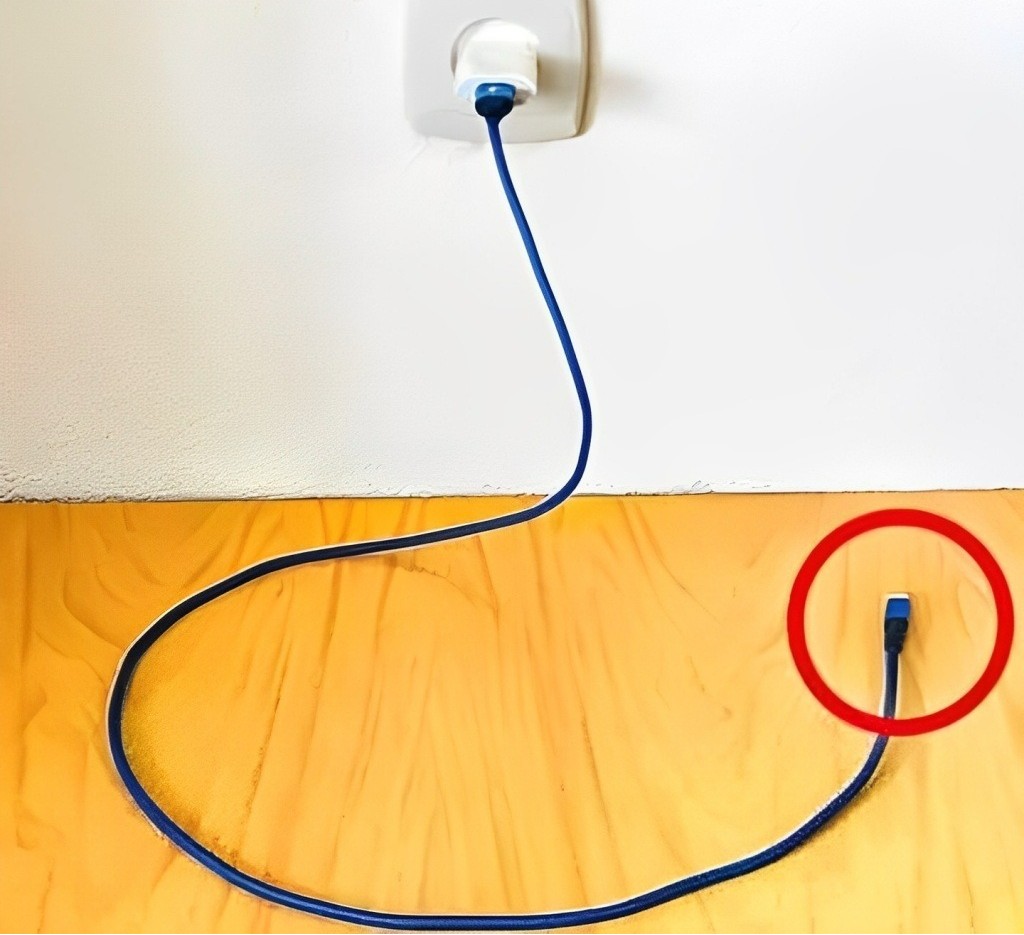
We’ve all done it. In the morning rush, you unplug your phone and sprint out the door, leaving the charger dangling from the outlet. It seems harmless, a tiny block of plastic and wires. What trouble could it possibly cause? It’s not like it’s running an appliance.
But here’s the surprising truth: that lonely charger is still very much “awake.” It’s sipping power, posing a small but real risk, and quietly aging on your wall. While it won’t single-handedly burn your house down or double your electric bill, the habit of leaving it plugged in is a classic example of a bad practice with cumulative consequences. Let’s break down exactly why it’s smarter to pull the plug.
1. The “Phantom Load” – It’s Drinking Power on Your Dime
This is the core issue. Any device with a transformer (that bulky cube or block) is designed to convert your home’s high-voltage AC power to the low-voltage DC power your gadgets need. To do this, it needs internal components—like capacitors and coils—to be ready for action.
When you leave it plugged in without a phone, it’s in a state of standby, not “off.” It’s still completing a circuit and drawing what’s called phantom power, vampire energy, or a ghost load. While minimal for one charger (typically 0.1 to 0.5 watts), it’s pure waste. Multiply that by the number of chargers in your home—phone, tablet, laptop, smartwatch, Bluetooth headphones—and the hours they sit idle, and the energy adds up across a year.
The Bottom Line: You are paying for electricity to do absolutely nothing. Unplugging is a zero-effort way to be more energy-efficient.
2. The Heat & Wear Factor: A Slow Degradation
A charger converting power generates heat. Even in standby, there is a slight electrical flow that creates minimal heat buildup within the charger itself.
-
Component Stress: This constant, low-level heat slowly degrades the internal capacitors and other components. Over months and years, this continuous thermal stress can make the charger less efficient and shorten its overall lifespan. That “why is this charging so slowly?” moment might be due to a worn-out charger that lived in your outlet.
-
Dust & Debris: A charger permanently plugged in, especially in a kitchen or living area, acts as a dust magnet. Dust is an insulator, and a layer of it can trap more heat, creating a hotter operating environment that accelerates wear.
3. The (Small but Real) Safety Risk
While modern chargers from reputable brands have excellent safety features, the risk is never zero, especially with cheap, uncertified knock-offs.
-
Power Surges: A sudden spike in your home’s electrical current (from a lightning strike or grid fluctuation) can travel through any connected device. A charger is a pathway. If a surge occurs while it’s plugged in, it can fry the charger or, in extreme cases, cause it to overheat or spark.
-
Faulty Components: A worn-out or poorly made charger can develop internal faults. If left energized in an outlet, a short circuit could occur, potentially leading to overheating, melting, or in very rare instances, a fire. It’s a low-probability event, but why have a potential ignition source sitting idle?
4. It’s an Unnecessary Clutter & Hazard
This is the practical, everyday reason. A dangling charger is:
-
Visual clutter that makes your clean wall look messy.
-
A physical hazard you might bump into, potentially damaging the outlet or the charger’s prongs.
-
A temptation for pets or young children to chew on or play with.
The Simple Habit That Solves Everything: Get into the routine of pulling the plug from the outlet, not just the device from the charger. It takes half a second.
What About Smart Plugs or Power Strips?
If unplugging feels like a chore, a smart power strip is a brilliant compromise. Plug your charger into a strip with a switch and get in the habit of flipping the switch off when not in use. This breaks the circuit completely, eliminating the phantom load and the safety risks, without you having to bend down and wrestle with plugs.
The Final Verdict: Leaving a charger plugged in is not an emergency, but it’s a habit that embodies waste—waste of energy, waste of the charger’s potential lifespan, and an unnecessary, however tiny, compromise on safety. In a world where efficiency and mindfulness matter, pulling that plug is a small, intelligent act of stewardship over your home, your wallet, and your peace of mind.