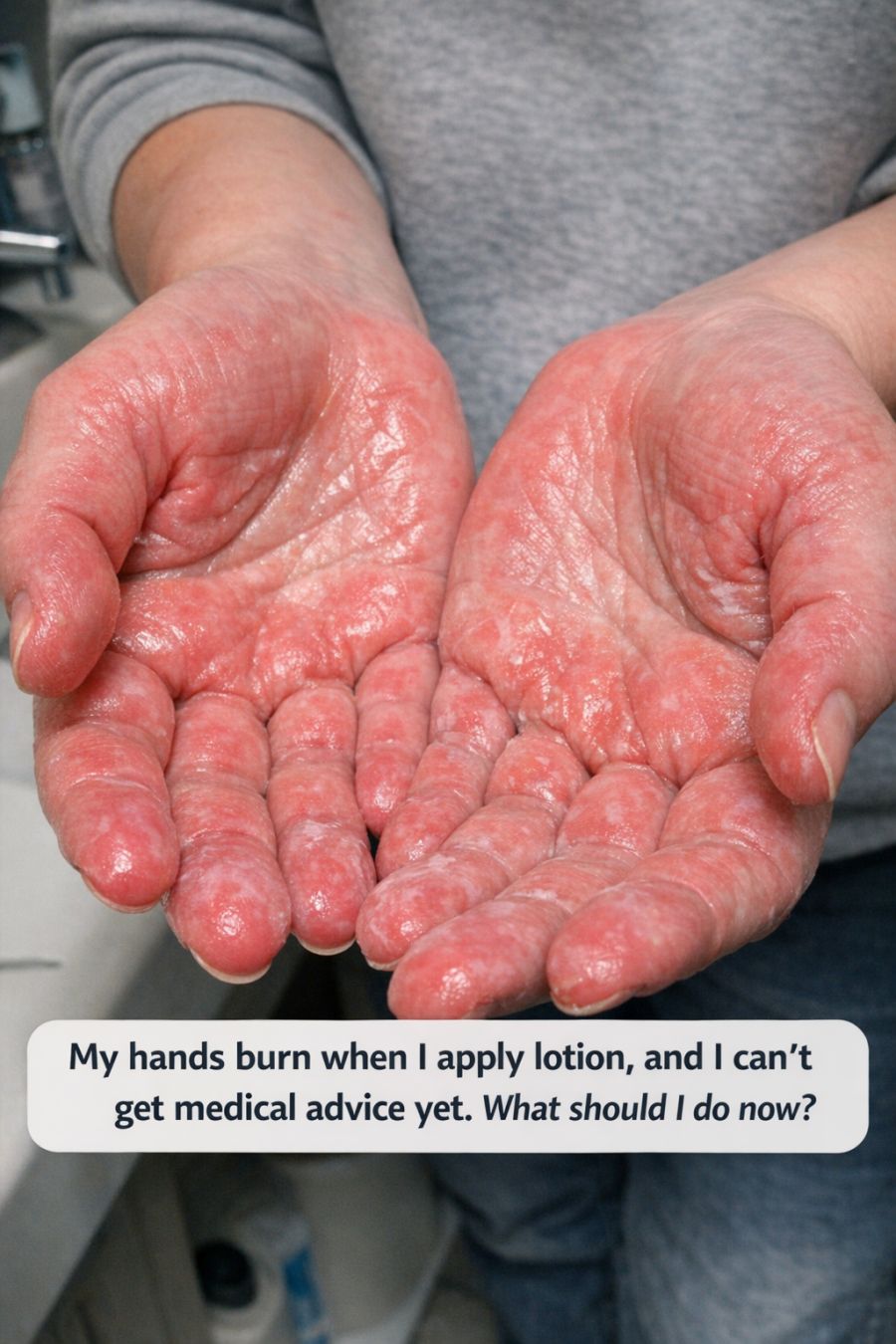
Experiencing a burning sensation upon applying lotion can be alarming, especially when you are unable to seek immediate medical advice. This discomfort can arise from a variety of causes ranging from allergic reactions to underlying skin conditions. Understanding how to address this issue at home is crucial until you can consult a healthcare professional.
In this article, we will explore several steps you can take to alleviate the burning sensation and protect your skin. These measures include identifying potential irritants, switching to gentler products, and monitoring your skin for any changes. By following these guidelines, you can help manage the discomfort and prevent further irritation.
1. First, Stop Using Anything That Makes Your Hands Burn
The moment you notice a burning sensation, discontinue using the lotion or any other products that might be causing the irritation. Continuing to apply these products can exacerbate the problem and potentially lead to more severe skin issues. It’s important to allow your skin time to recover and avoid further damage.
Keep an eye on other products you use on your hands, such as soaps, hand sanitizers, and even dishwashing liquids. They might contain similar ingredients that could also trigger a reaction. Eliminating these potential irritants can help your skin heal more quickly.
2. Quickly Rinse Off the Lotion and Gently Cleanse Your Hands
Once you notice the burning sensation, rinse your hands immediately with lukewarm water to remove as much of the lotion as possible. Avoid using hot water as it can exacerbate irritation. Follow this with a gentle cleanser that is free from fragrances and harsh chemicals.
Pat your hands dry with a soft towel, taking care not to rub, as this can further irritate your skin. This simple step can help reduce the burning sensation and prevent further irritation from the lotion.
3. Check for Obvious Triggers: Fragrance, Acids, Retinoids, and Alcohol
Review the ingredient list on the lotion packaging to identify any common irritants. Fragrances and alcohol are frequent culprits because they can be drying and irritating to sensitive skin. Similarly, acids like alpha-hydroxy acids (AHAs) or beta-hydroxy acids (BHAs), and retinoids, are known to cause irritation in some individuals.
If you identify any of these ingredients, it’s advisable to avoid products containing them in the future. Opt for formulations labeled as ‘fragrance-free’ and ‘alcohol-free’ to minimize the risk of further irritation.
4. Switch to a Plain, Barrier-Repair Moisturizer Only
Until you can see a healthcare professional, switch to a plain, unscented moisturizer designed to repair the skin’s barrier. Look for products containing ceramides, hyaluronic acid, or glycerin, which can help restore moisture without causing irritation.
Apply the moisturizer gently after washing your hands, while your skin is still slightly damp, to help seal in moisture. Be consistent with this routine to support your skin’s natural healing process.
5. Protect Your Hands From Water, Soap, and Irritants for Now
Minimize your hands’ exposure to water and soap to prevent further dryness and irritation. When washing dishes or cleaning, wear protective gloves to shield your skin from harsh detergents and chemicals.
Avoid using harsh soaps and opt for mild, hydrating hand washes. After washing, apply your barrier-repair moisturizer to keep your skin hydrated and protected.
6. Soothe the Burn: Safe At-Home Measures While You Wait
To alleviate the burning sensation, you might try applying a cool compress to your hands. Soaking a clean cloth in cold water and placing it on the affected area for 10-15 minutes can provide temporary relief.
Over-the-counter hydrocortisone cream can also reduce inflammation and itching if the burning is accompanied by redness or swelling. However, use it sparingly and only as directed on the packaging.
7. Watch for Signs of Allergy Versus Irritation
Differentiate between an allergic reaction and irritation by observing additional symptoms. An allergic reaction might include itching, redness, swelling, or even blistering. In contrast, irritation typically involves a burning sensation without these additional symptoms.
Take note of when the symptoms occur and whether they worsen with specific products. This information can be invaluable for a healthcare professional when diagnosing the issue.
8. When Burning Suggests a Compromised Skin Barrier
A burning sensation may indicate a compromised skin barrier, especially if your hands feel dry, tight, or appear flaky. The skin barrier functions as a protective layer that prevents moisture loss and shields against irritants.
Focus on repairing this barrier by using thick, emollient creams or ointments that contain ingredients like shea butter, lanolin, or petrolatum. These can provide a protective layer that supports healing and prevents further damage.
9. When Burning Might Be Eczema, Contact Dermatitis, or Infection
Consider the possibility of eczema or contact dermatitis if the burning is accompanied by patches of red, inflamed, or scaly skin. These conditions often require specific treatments, such as prescription creams or ointments.
If you suspect an infection, characterized by warmth, pus, or severe swelling, seek medical attention promptly. Infections require appropriate medical treatment to prevent complications.
10. Red-Flag Symptoms That Mean You Should Seek Urgent Care
Certain symptoms warrant immediate medical attention, such as severe swelling, blisters, or open sores. These could indicate a serious allergic reaction or infection that requires urgent care.
If you experience difficulty breathing, throat tightness, or feel lightheaded, seek emergency medical help, as these could be signs of anaphylaxis, a life-threatening allergic reaction.
11. How to Document What’s Happening So a Doctor Can Help Later
Keep a detailed record of your symptoms, including when they started, what products you used, and any changes in your skin’s condition. Take clear photos of the affected areas to show progression or improvement over time.
Bring this documentation with you when you see a healthcare professional. It can aid in diagnosing the issue and determining the most effective treatment plan.