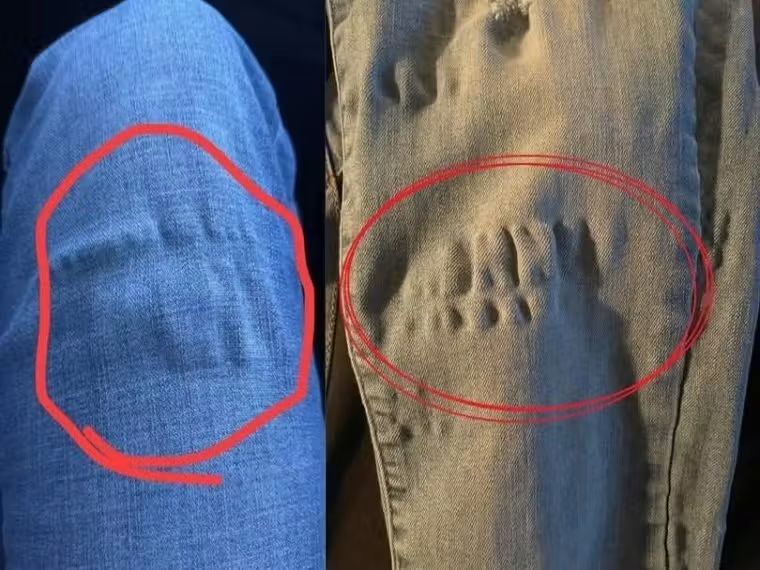
You pull your favorite jeans out of the washing machine, ready to wear them again, and suddenly they look… off. The fabric appears wavy, twisted, or covered in odd ripples, especially along the seams and legs. Don’t worry — this isn’t a laundry fail, and it doesn’t mean your jeans are ruined. This common issue has more to do with fabric science than washing mistakes.
The main reason jeans develop weird ripples after washing is fabric shrinkage happening unevenly. Most denim is made from cotton, a natural fiber that reacts strongly to water and heat. When cotton gets wet, its fibers swell. During drying, especially with heat, those fibers contract again — but not always at the same rate across the entire garment. This uneven contraction creates tension in the fabric, which shows up as ripples or waves.
Another big factor is how denim is woven. Traditional jeans are made using a twill weave, where the threads run diagonally rather than straight up and down. This weave gives jeans their strength and durability, but it also means the fabric can twist slightly when exposed to water and motion in the washing machine. That twisting effect is why some jeans look skewed or spiraled after washing.
Seams also play a major role. The stitching thread used in jeans is often made from polyester, which doesn’t shrink the same way cotton does. When the cotton denim shrinks but the stitching doesn’t, the fabric pulls against the seams, causing puckering and ripples along stitched areas. This is especially noticeable on cheaper or mass-produced jeans where fabric pre-treatment is minimal.
Washing and drying habits can make the issue more visible. Hot water loosens fibers more aggressively, and high heat in the dryer speeds up shrinkage. Overloading the washing machine can also prevent jeans from moving freely, causing them to crease and set into ripples as they dry. Even how jeans are folded or left crumpled after washing can lock those waves into place.
The good news is that ripples don’t usually mean permanent damage. In many cases, wearing the jeans for a short time allows body heat and movement to relax the fibers again. Light steam ironing or hanging the jeans in a steamy bathroom can also help smooth them out. To prevent future rippling, washing jeans inside out in cold water and air-drying or using low heat can make a noticeable difference.
In short, those strange ripples are simply the result of natural fibers, fabric construction, and modern washing methods interacting with each other. It’s a normal denim behavior — not a sign that your jeans are low quality or worn out.